
Voices from the field: Interview with David Hahn
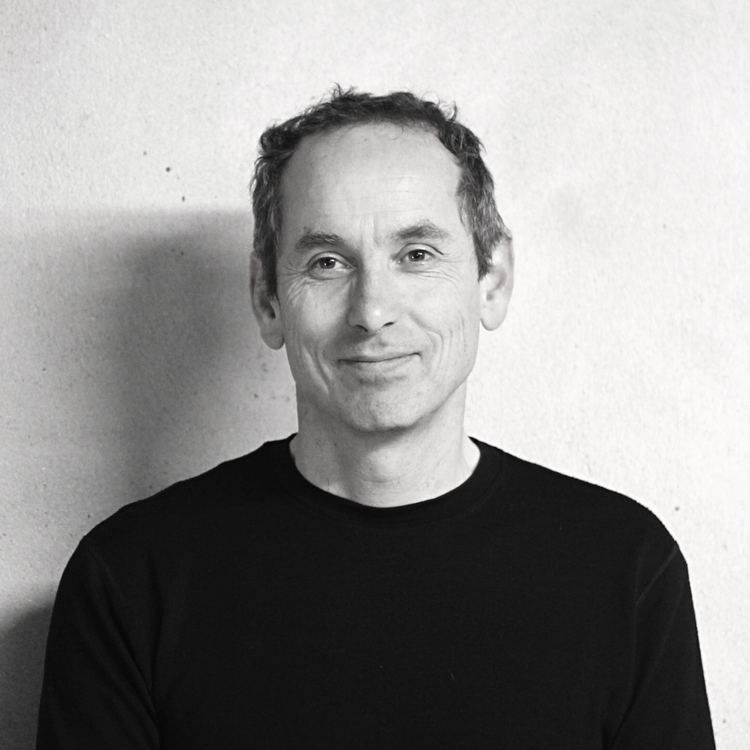
This feature explores the work and reflections of David Hahn, Senior Architectural Advisor for Healthcare at Article 25. David’s “field” is not a construction site abroad, but one of technical depth and professional collaboration - helping shape hospital buildings that truly serve the people who use them.
With experience across engineering and architecture, and decades in healthcare design, David brings quiet thoughtful precision, collaboration and empathy to his work.
What first drew you to architecture?
The work I do has to be meaningful.
I started out as a mechanical engineer and studied at Edinburgh. I enjoyed the subject - even got offered a PhD - but I found myself more interested in buildings. You can be a mechanical engineer on buildings, but I wanted to be part of how they’re designed and used.
I talked my way into a job in an architectural office without any formal training and learned on the job. Later, I studied part-time at the Glasgow School of Art, the only architecture school in Scotland that allowed that at the time. It took longer, but it gave me a better balance - working in practice while studying made it all very real.
How did your engineering background shape your work as an architect?
It’s been a real strength. I understand how engineers think and can talk their language. That helps a lot when you’re working with design teams - it’s all about good communication.
Architecture is a team sport. A lot of the work is about reducing uncertainty: making sure everyone understands what’s happening and why. The clearer you are, the fewer misunderstandings there are, and the better the building in the end.
What led you to focus on healthcare architecture?
That came through my wife, who worked for the NHS. She knew a practice that needed architects with healthcare experience and, without telling me, sent in my CV! I ended up joining Murphy Philipps Architects and stayed there for 18 years.
Through that, I came to understand how hospitals and the NHS work - the systems, the standards, and the people. It’s an incredibly complex world, but it’s also one where good design really matters. You’re creating spaces that support care and healing, and that’s something worth contributing to.
Is there a project or period of work you’re most proud of?
There isn’t one single building I’d point to. I’ve been closely involved in a number of hospital projects - including Croydon Accident & Emergency, Watford Hospital, and Newham Accident & Emergency - and over several years worked across the West Hertfordshire Hospitals Trust.
It was a period where I felt I genuinely made a contribution, not just to individual projects, but to how hospitals functioned as part of a larger system. It’s about being part of the NHS, part of a team that improves how healthcare is delivered. I’m proud of that - it felt like meaningful work, and I knew my skills were being used for something worthwhile.
What did you learn from working with the NHS that applies to Article 25’s global building projects?
A lot about responsibility and clarity. In the UK, every healthcare building must be designed to meet a huge amount of guidance and compliance. To do your job properly, you have to understand that framework and explain it clearly to others.
When I advised on the hospital project in Montserrat with Article 25, I brought that experience with me. The context was different, but the principle was the same: explain the options, make sure people know the implications, and let them make informed decisions. That builds confidence and trust in the process.
What was most important in the Montserrat project?
Listening. Always listening first.
It was a delicate time for the project, with lots of people coming from different professional backgrounds. The key was to build relationships and create an environment where everyone felt comfortable sharing ideas. You learn to speak in different languages - not literally, but professionally. Architects, doctors, engineers, and clients all see the world differently. Understanding that and finding common ground is what makes a project succeed.
What brought you to Article 25?
Someone I’d worked with before had joined and told me about the kind of projects they were doing - real, impactful work that uses professional skills to help people. It immediately made sense to me.
Article 25 is full of people who want to make the world better. It’s not about money or prestige; it’s about doing good work with purpose. It’s refreshing to be part of that kind of team.
What advice would you give to young architects or engineers starting out?
Learn to listen and communicate. If you can understand how others think - whether they’re doctors, clients, or engineers - you’ll go a long way.
And focus on the detail. In healthcare especially, where a socket goes or how a door opens can make a real difference to how people work and how patients are treated. Those small decisions add up to big impact.
What do you enjoy outside of work?
I like making things with my hands; carving wooden bowls and spoons. It’s the same creative instinct that drew me to architecture. You draw something, you make it, and there it is. There’s a directness to that which I really enjoy.
Some final reflections
For David, good architecture starts with communication - listening, understanding different perspectives, and building trust between everyone involved.
“You’ll make the world better if you understand what people need.”
That, he says, is at the heart of good design and good teamwork alike.
