
Building for resilience: Preparing Montserrat’s New National Hospital for hurricane season
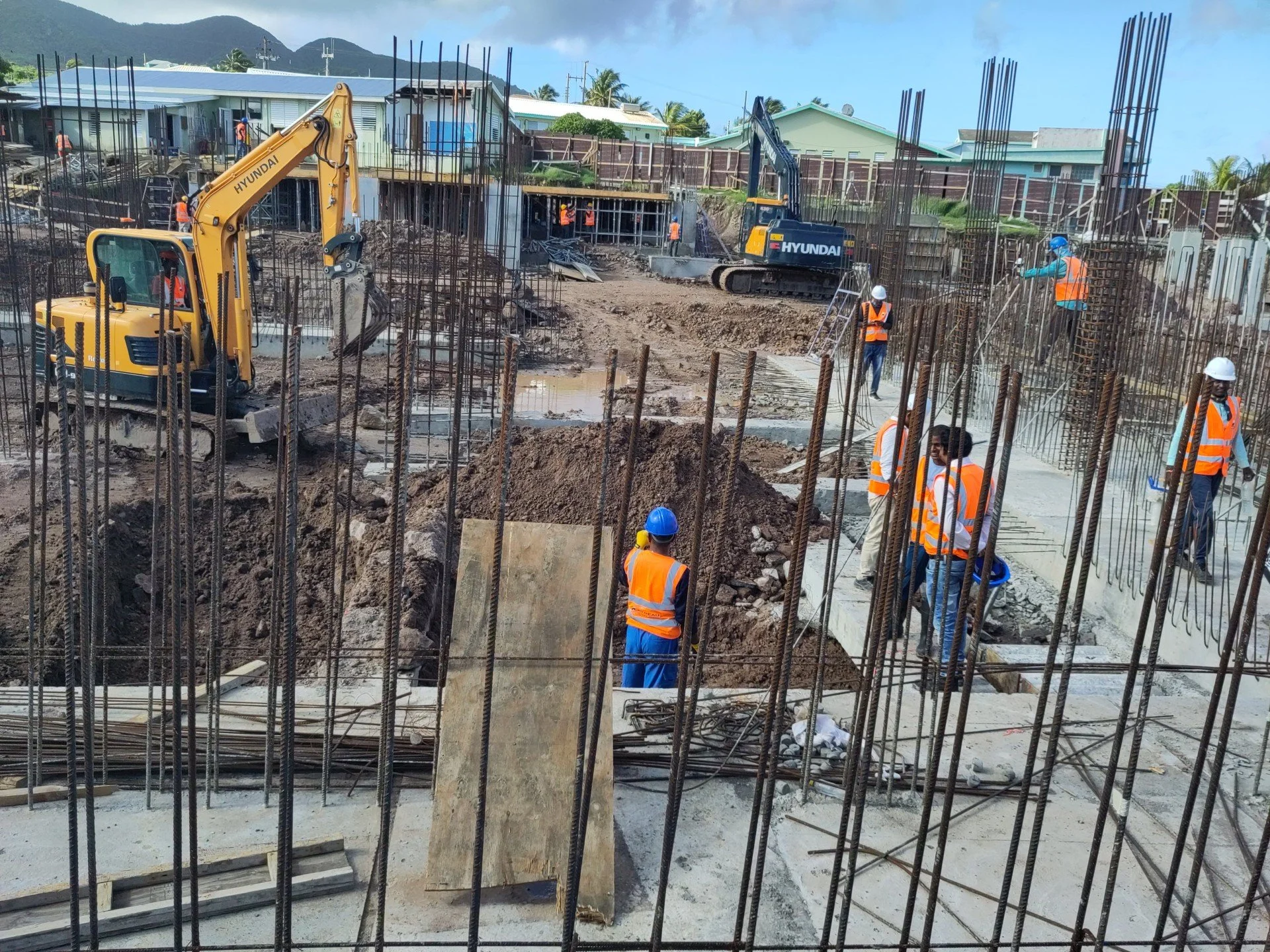
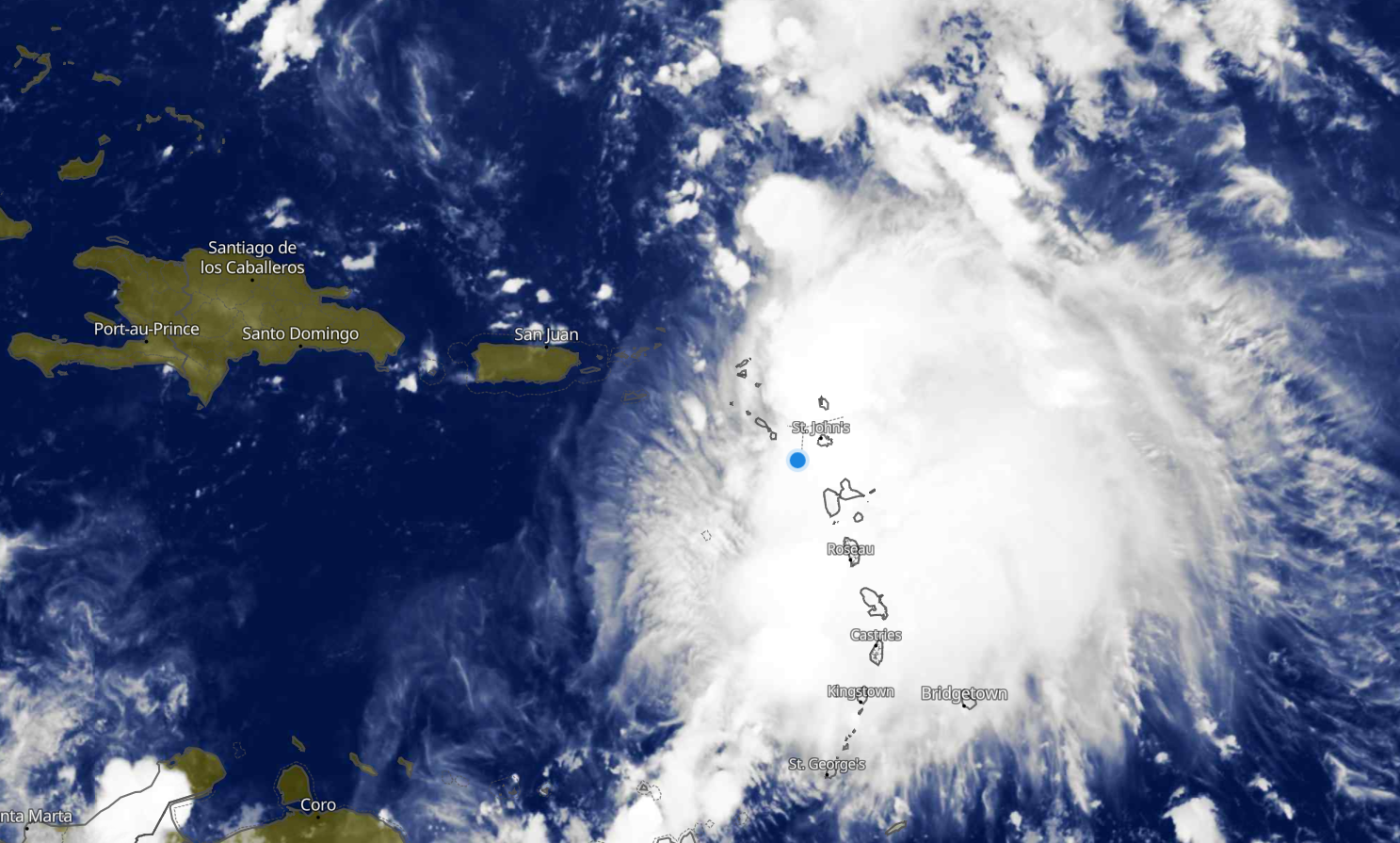

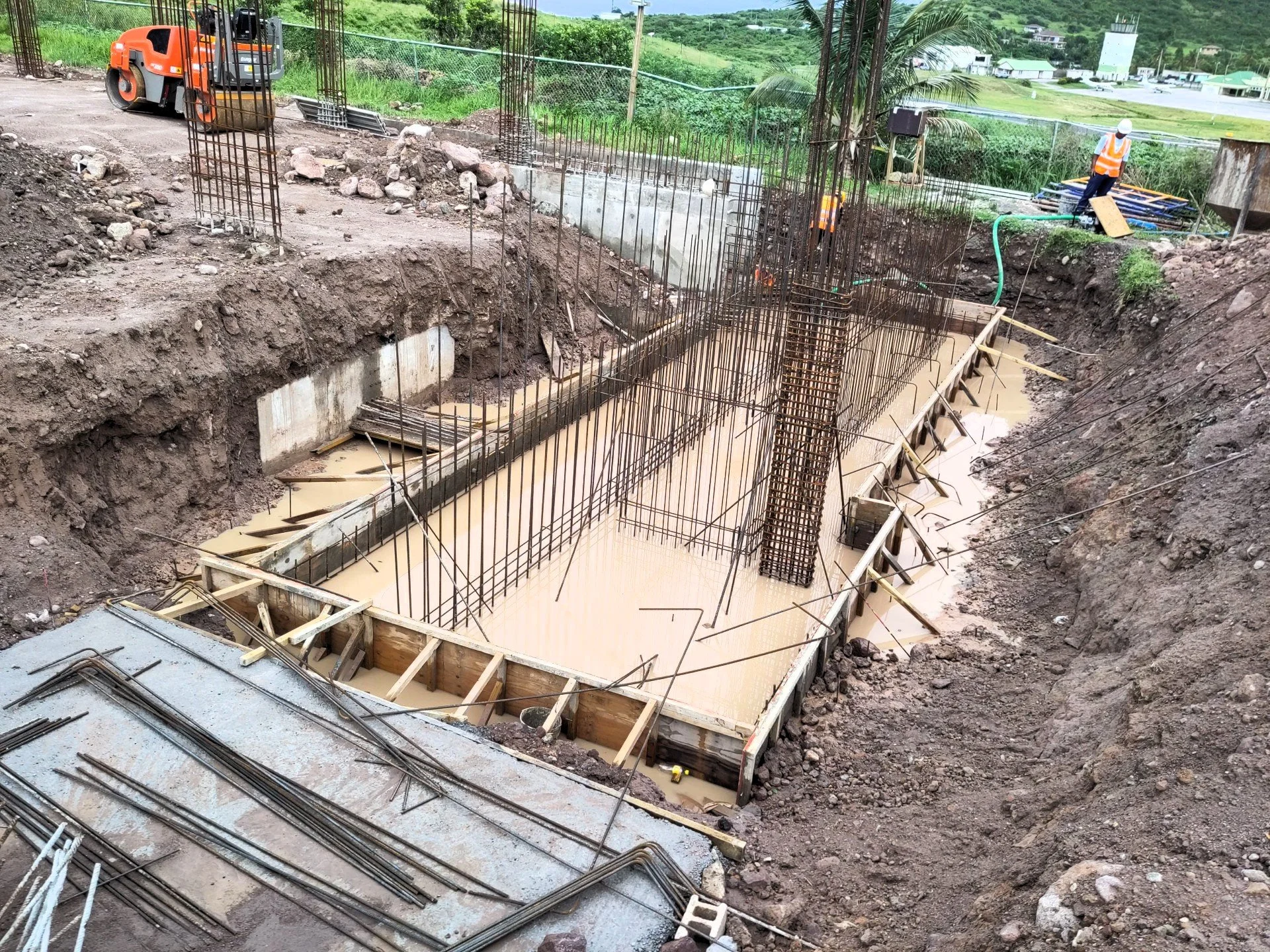

Photos from construction before, during and after Storm Jerry. Image 4 shows flooding on site after the storm.
As construction progresses on Montserrat’s new National Hospital, resilience remains at the heart of every decision - not only in the final design, but also throughout the construction process itself.
Located on an island exposed to hurricanes, volcanic eruptions, earthquakes and heavy rainfall, the new hospital is set to become the most secure building on Montserrat - a facility designed to serve as the safe gathering point for the community in times of crisis. But before it reaches completion, the site team faces a different challenge: how to protect a half-built structure when hurricane conditions threaten.
“The hardest part is securing everything that could blow away,” explains Mark Webb, Site Architect for Article 25. “That means tidying up loose materials, stopping work at height when conditions worsen, and making sure people are safe before anything else.”
A lucky escape from Storm Jerry
Earlier this month (October 2025), tropical storm Jerry swept across the Caribbean, bringing heavy rain and strong winds to neighbouring islands including Guadeloupe, where severe flooding caused road damage and one fatality. On Montserrat, however, the impact was far lighter - a lucky escape for the island and for the hospital project.
“The aftermath looks okay,” says Mark. “I’m not aware of any damage except to roads - we were really lucky. The Dry Waterfall here became a very wet waterfall though and there was some flooding.”
While the site lost just one day of work due to precautionary shutdowns, the event served as a stark reminder of how quickly such storms can intensify, as seen with Hurricane Maria in 2017. The near miss reinforced the importance of the hospital’s resilient design - ensuring that when a major storm does hit, both the building and the community it serves will be protected.
Coordinating before the storm
Preparation starts well before any warning is issued. Following best-practice guidance similar to the Miami-Dade hurricane preparedness plan, the team implements precautionary steps at least 24 hours before a storm is expected to hit.
Key measures include:
Clearing and securing loose materials — timber, formwork, and scaffolding are tied down or stored safely to prevent wind damage.
Temporary structure checks — fencing, drainage, and support systems are reinforced, or removed if necessary.
Power and water safety — all electrical systems are turned off to prevent damage, and water is stored in case of service disruption.
Worker welfare — safety always comes first, with all site staff moved to secure shelter before conditions deteriorate.
“If a severe hurricane hit, fences would come down and scaffolding might collapse,” says Mark. “You can’t completely protect a half-built structure - the goal is to reduce damage as much as possible and make sure everyone is safe. There is a recovery stage, so it is better to include a contingency in the programme to allow for repairing any damage and recover the programme.”
Planning for recovery
Even after a storm passes, the recovery phase presents new challenges. Flooding, debris and damaged access routes can delay site activity and disrupt supplies. The Montserrat site’s elevated position offers some protection from flooding, but with increasing rainfall patterns, drainage remains a constant priority.
The team’s resilience strategy includes:
On-site power generation and water supply to maintain operations when utilities fail.
Backup storage for food, fuel, and essential materials.
Clear recovery plans to assess damage and restart work safely after the storm.
Building a safer future
Though only in its early stages, the hospital project represents long-term disaster mitigation in action. Once complete, it will not only deliver state-of-the-art healthcare to the people of Montserrat, but also serve as a critical operations hub during natural disasters - capable of functioning independently through hurricanes, ash fall, or earthquakes.
“By next hurricane season, we’ll have the generator building and more permanent systems in place,” Mark adds. “Each phase of construction improves resilience - step by step, we’re building for the future.”
The Montserrat National Hospital stands as a symbol of preparedness and progress - demonstrating that resilience isn’t just designed into buildings once they’re finished; it’s built into every stage of construction.
