
Anandaban Hospital, Nepal: Architecture, resilience & 10 years working with The Leprosy Mission
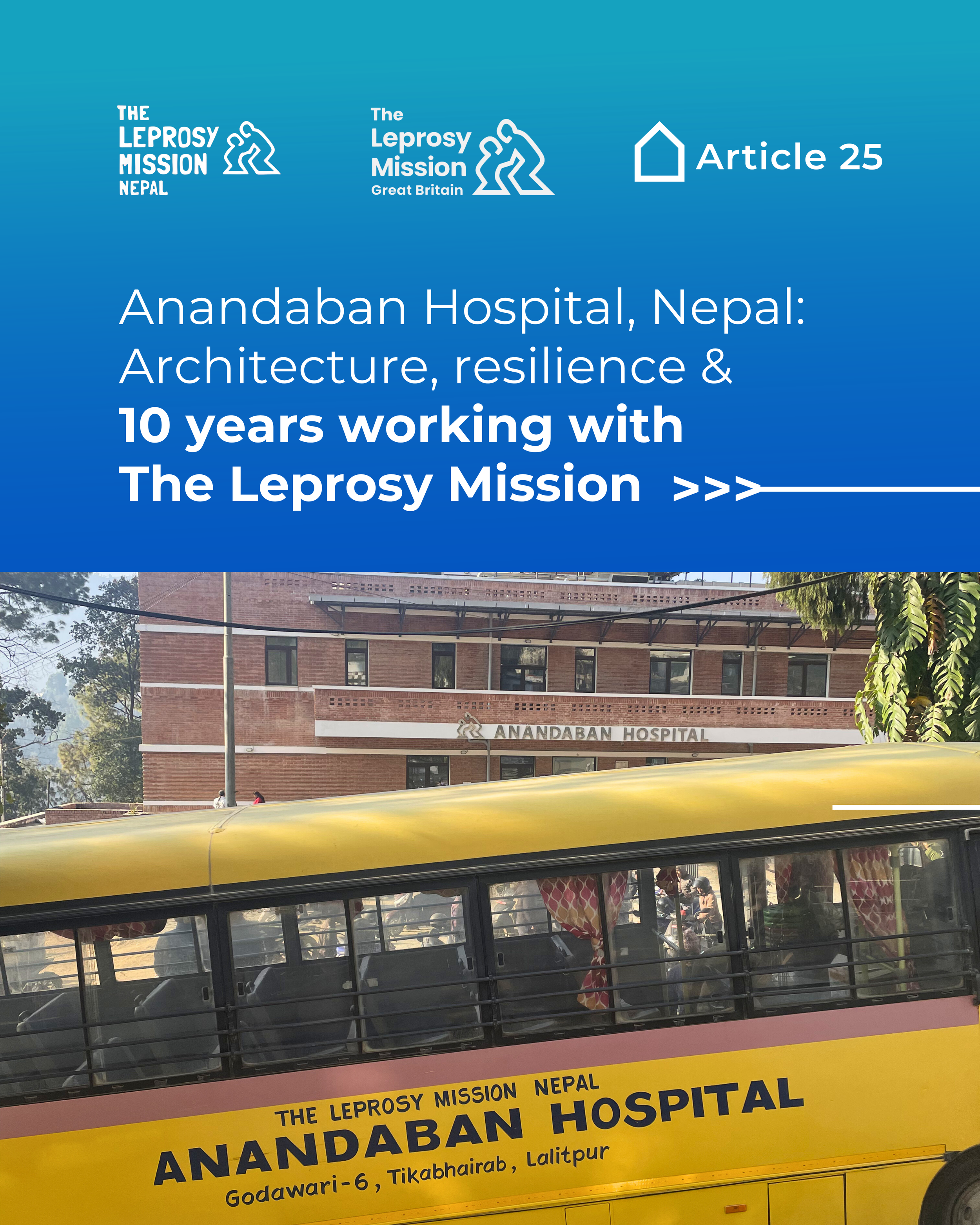
Scroll through the timeline charting ten years of partnership, progress and perseverance at Anandaban Hospital.
Anandaban means ‘forest of joy’. Nestled on a forested hillside south of Kathmandu, Anandaban Hospital is The Leprosy Mission’s flagship facility in the country and Nepal’s main referral centre for leprosy complications - one of the only places in the country where patients can access life-changing reconstructive surgery.
For ten years, it has also been the site of one of Article 25’s most enduring partnerships: a collaboration that has been tested by earthquakes, a pandemic, forest fires and landslides, and which continues to look forward.
After the earthquake: Building back better
On 25 April 2015, a magnitude 7.8 earthquake struck Nepal, followed by a 7.3 aftershock just seventeen days later. Nearly 9,000 people lost their lives, and across the Kathmandu Valley, the destruction was immense.
At Anandaban, much of the hospital’s infrastructure - some of which is over 50 years old - was left unsafe, and staff were forced to treat patients in tents on the hospital grounds. For a facility serving some of Nepal’s most vulnerable people, the situation was urgent.
The Leprosy Mission Great Britain turned to Article 25 to assess the damage and develop a Masterplan for the site’s future. From that process, a clear need emerged: a new Trauma Centre that would be seismically resilient, purpose-built for A&E as well as specialist leprosy care, and designed to generate income to help sustain The Leprosy Mission’s wider mission.
Above all, it had to be a building that would remain standing and fully operational when the next earthquake came.
“After the 2015 quakes, the hospital had no space to work from and was forced to set up tents to treat injured people. The Trauma Centre was designed to be resilient to any future natural disasters and provide The Leprosy Mission Nepal with a safe space to continue healthcare provision if the worst happens.” - Toby Pear, Architect Associate, Article 25.
Why Anandaban
For decades, Anandaban has quietly held international importance. At the heart of that importance is research. The Mycobacterium Research Laboratory, established at Anandaban in the 1970s to study human immune responses to leprosy, forms part of The Leprosy Mission's global research hub - alongside centres in Bangladesh and India - and is where some of the world's most ground-breaking leprosy science is taking place today.
Covering everything from understanding how leprosy is transmitted, to clinical trials, to the social and psychological dimensions of living with the disease, this work ultimately serves not just Nepal, but people in every corner of the world. For The Leprosy Mission, the ambition is clear: to defeat leprosy in our lifetime.
Among the many who have championed Anandaban's work were members of the British royal family, including Princess Diana - who visited the hillside campus and whose support for The Leprosy Mission helped draw attention to the stigma surrounding the disease - and later Prince Harry, who met members of the Anandaban team in 2016, following in her footsteps. Their presence reflected a broader global recognition: Anandaban is a place whose work matters deeply, and a place worth investing in for the long term.
The Trauma Centre, Anandaban Hospital
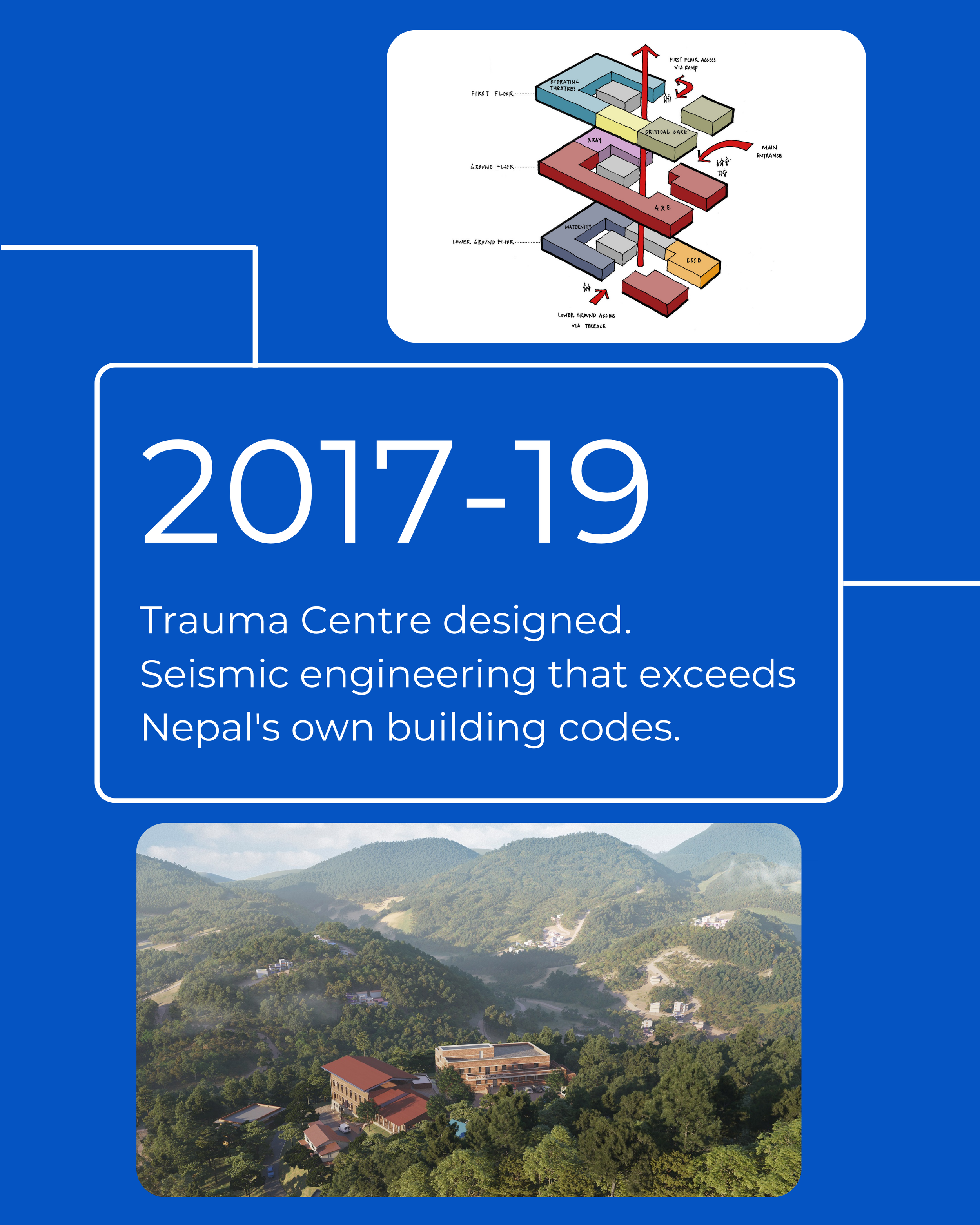
Designed between 2017 and 2019 in collaboration with engineers Ramboll, Hoare Lea, WSP and JSA Kathmandu, the Trauma Centre uses a reinforced concrete frame with brick infill that exceeds Nepal’s seismic code requirements. Cut into the natural contours of the hillside, the building utilises natural ventilation as far as possible, and uses locally sourced brick in keeping with the traditional construction of the valley.
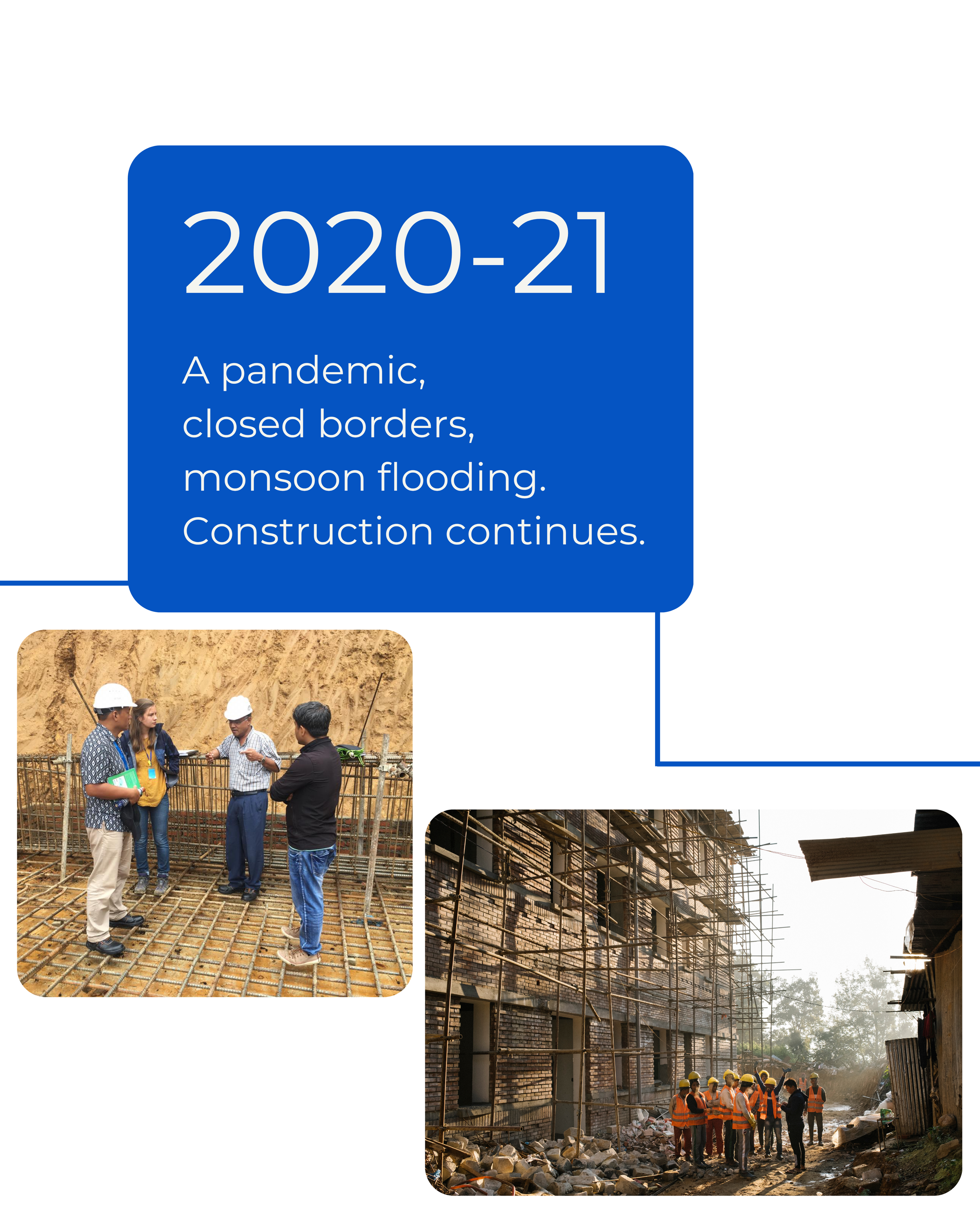
Bringing the building to completion was far from straightforward. Covid-19 disrupted the supply chain and restricted the movement of workers, Indian border closures cut off key materials, and construction continued within a live hospital throughout the pandemic.
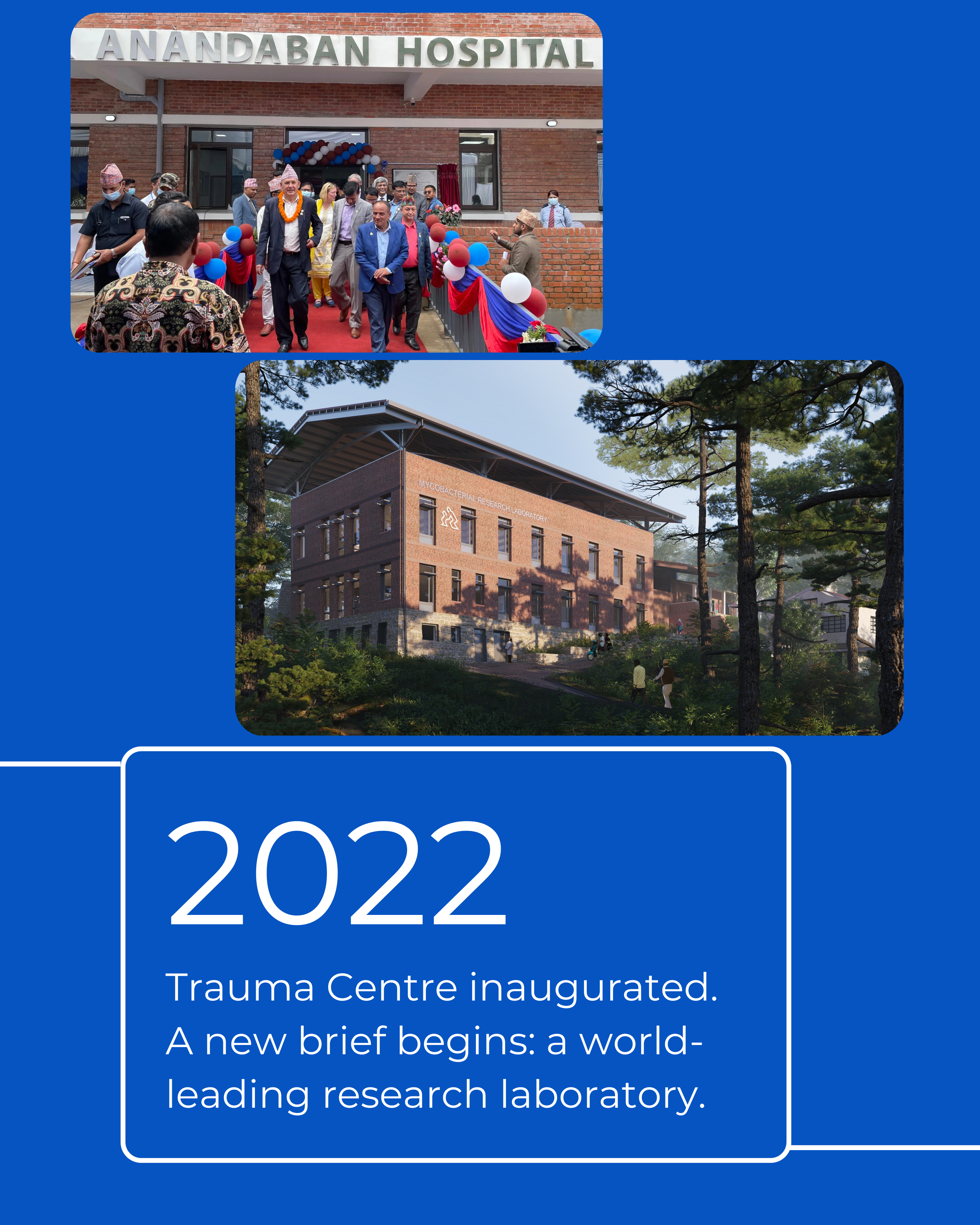
Through all of it, the project team - including a dedicated on-site architect - kept the project moving, and in 2022 the Trauma Centre was inaugurated. It was a significant milestone, and a long-awaiting step change for the medical care provided at the hospital.
World-class research facility
With the Trauma Centre complete, the partnership with The Leprosy Mission deepened. Anandaban’s existing laboratory - housed in a converted hostel and working with ageing equipment - was at risk of losing its government licence. Yet the research carried out there is genuinely world-leading: focused on late-stage leprosy, it helps governments and organisations globally to make evidence-based policy decisions for leprosy-affected populations. A new, purpose-built facility was urgently needed to protect that work.
Between 2022 and 2024, Article 25 developed a full design for the Anandaban Mycobacterial Research Laboratory: 1,100 sqm of new space across two buildings, incorporating a Clinical Laboratory to support the hospital’s other services, as well as a Pharmacy, Blood Bank and 500 sqm of refurbishment. Shaped through intensive consultation with the laboratory team and careful structural engineering on a steep, seismically active slope, the design drew on the same principles - and many of the same locally sourced materials - that had defined the Trauma Centre. A construction tender was issued.
The Trauma Centre proves its resilience
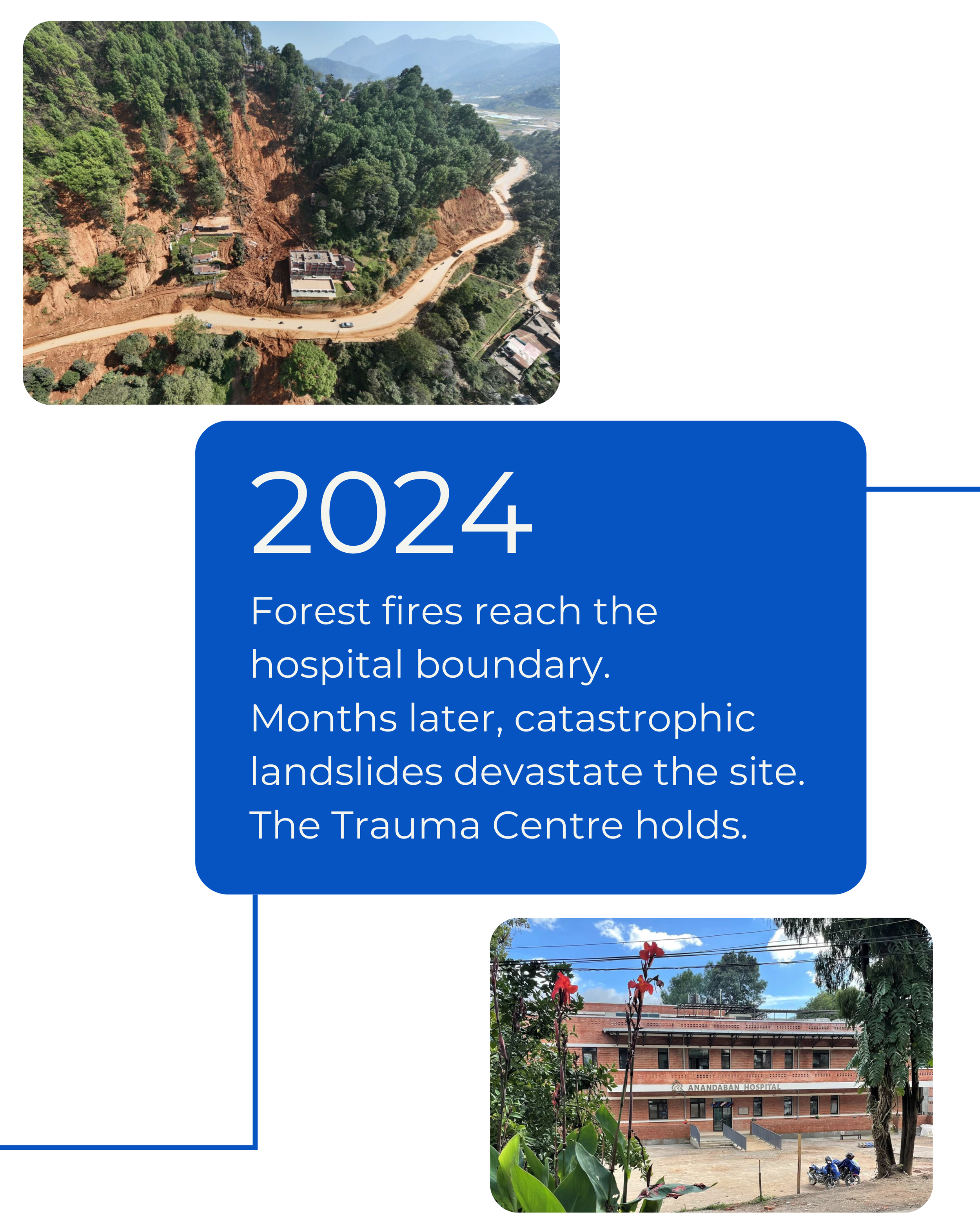
In April 2024, patients had to be evacuated from the hospital as forest fires swept through the surrounding hills, coming dangerously close to the hospital site. Then, in September of the same year, unprecedented rainfall triggered catastrophic flash flooding and landslides across Anandaban. Several buildings were lost, a number of others had to be evacuated, and tragically, one staff member was killed. With the site in a critical state, the laboratory tender had to be cancelled.
Through everything, the Trauma Centre held. Designed precisely for moments like this, it emerged from the landslides with minimal damage and stepped into a new role: hosting the outpatient department, leprosy ward, general ward and operating theatre as surrounding buildings remained unsafe.
A decade on from the earthquakes that had first brought Article 25 to Anandaban, the building’s purpose and resilience had never been more apparent.
“Amid the destruction, there was some hope.”
Back at the drawing board, with a new site
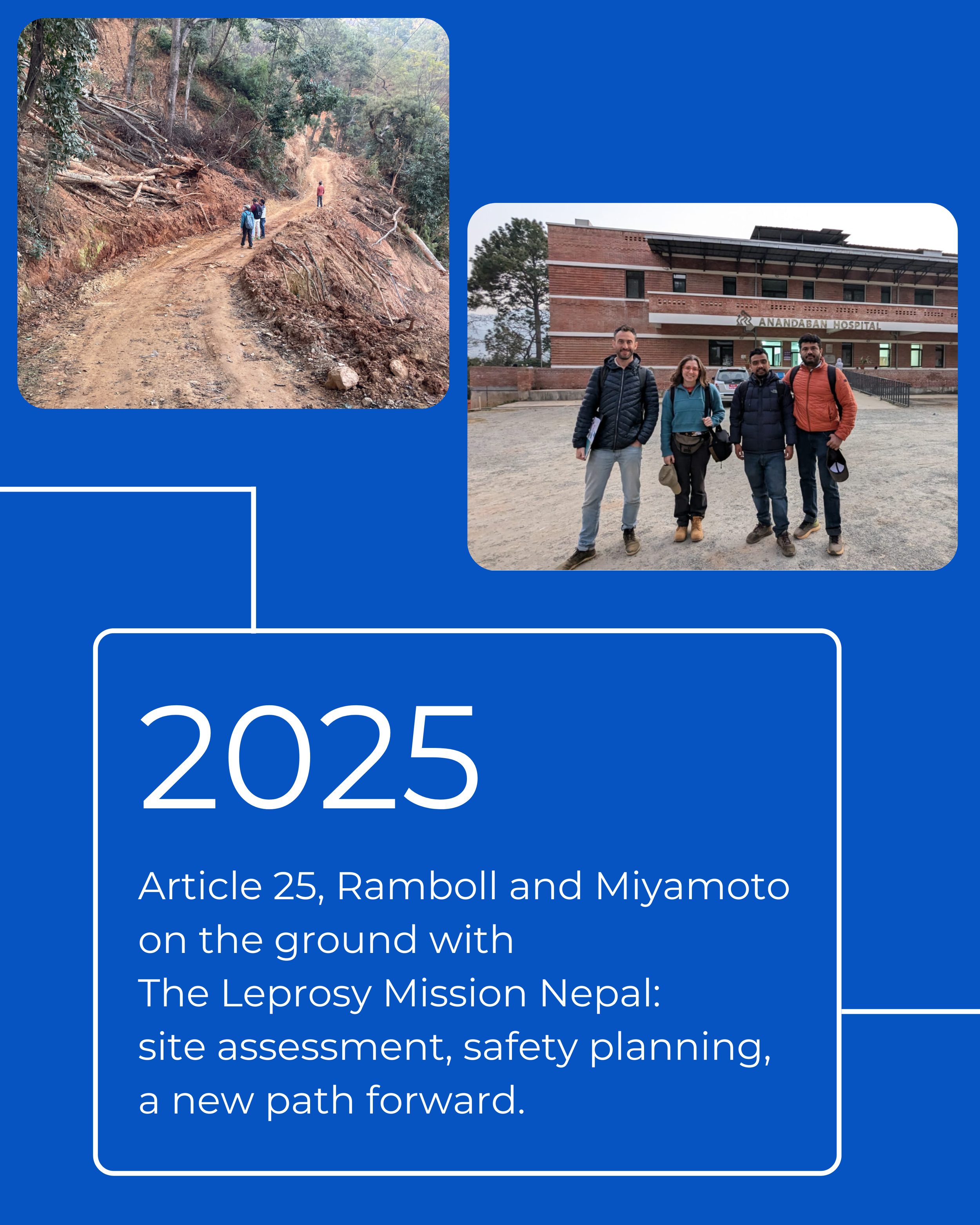
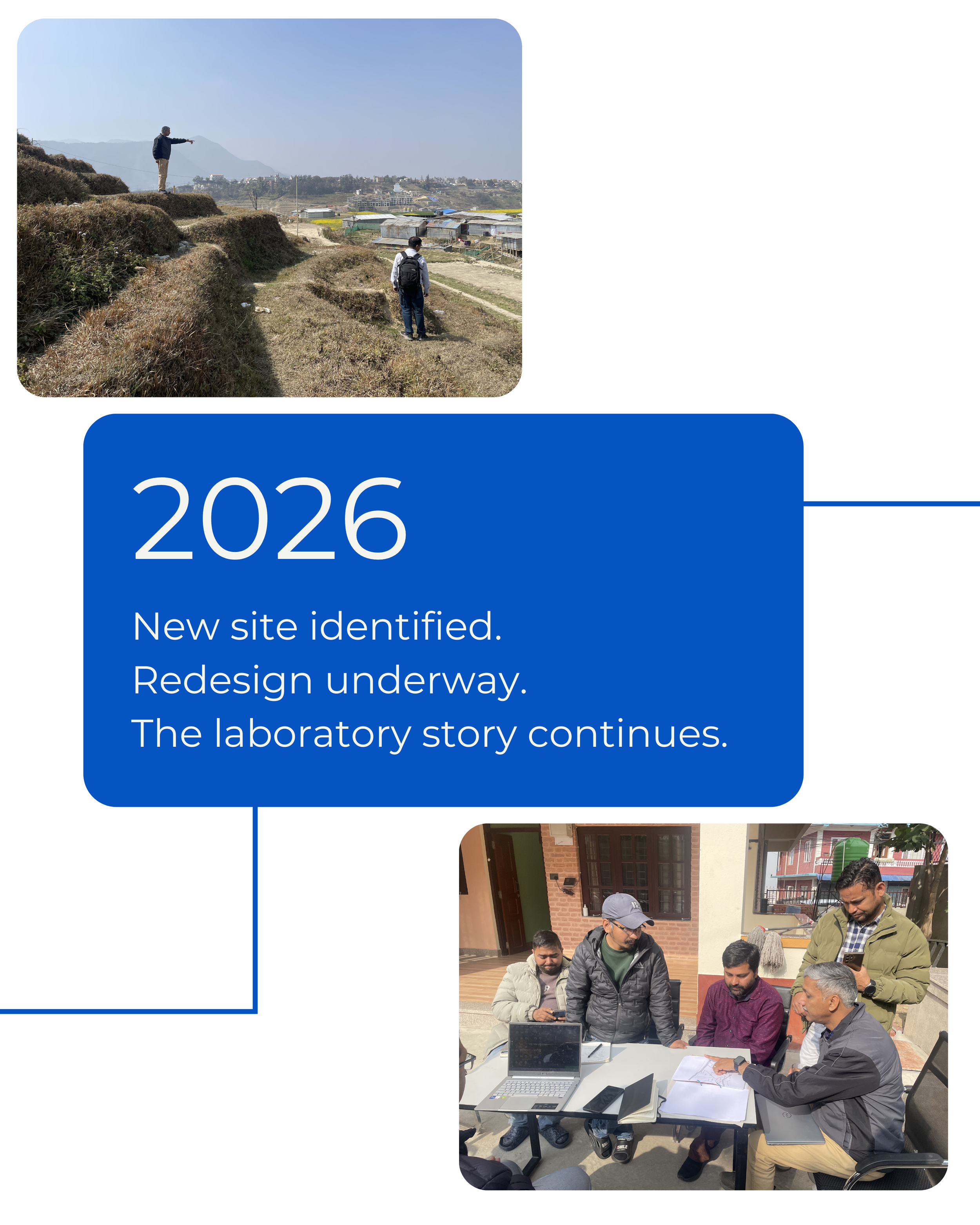
In 2025, a new nearby site was identified for the research laboratory, and with it, a renewed sense of possibility. In February 2026, Architect Associate Toby Pear visited the site and the redesign is now underway - updated for the new location, and shaped by everything the team has learned over a decade of working at Anandaban.
Ten years of partnership, two major building projects, and no shortage of obstacles along the way. What has remained constant throughout is a shared commitment to delivering the very best for the patients, clinicians, and researchers at Anandaban. The laboratory story is far from over - and the next chapter is already being written.
